
May 2026 Bonsai "Growing Tips" Column
Seasonal bonsai musings from Colin
Colin Fraser Purcell
5/12/20264 min read
Stages of Bonsai Development
This month, let’s take a break from seasonal tips and talk about something more theoretical: the stages of bonsai development. There aren’t really any “rules” in bonsai, but there are lots of sensible guidelines and conventions that can help you improve your trees and collections . . .
What I’ll describe here is a broad overview, and very general. It won’t apply to every tree, or even every species, but it may help organize your thinking. I like to think about a bonsai as having roughly three stages to its life: Trunk Development, Branch Development, and Refinement (in that order). You can also think of them as Fast Growth, Medium Growth, and Slow Growth stages respectively.
Trunk Development is a fast growth stage — Key aspects of this stage include developing caliper (trunk thickness), taper, and movement as well as healing large chops (where applicable). This is also the stage to prevent pitfalls like reverse taper, walking roots, and uninteresting straight sections of trunk. Notice that at this point we are not concerned about a “front” or foliage size or a small ceramic pot.
This is growing raw material, not styling bonsai. Pre-Bonsai in trunk development are usually in large nursery pots or in the ground, in an organic soil mix (like free-draining potting soil), and are worked infrequently (annually or even less). Not everyone does this stage, and it is a different skillset and process from what we usually think of as bonsai. I like to say that “if bonsai is sushi, growing pre-bonsai is fishing.” If you purchase quality Pre-Bonsai from a grower, then they have already done this stage for you, and you can probably transition the tree to the next stage . . .
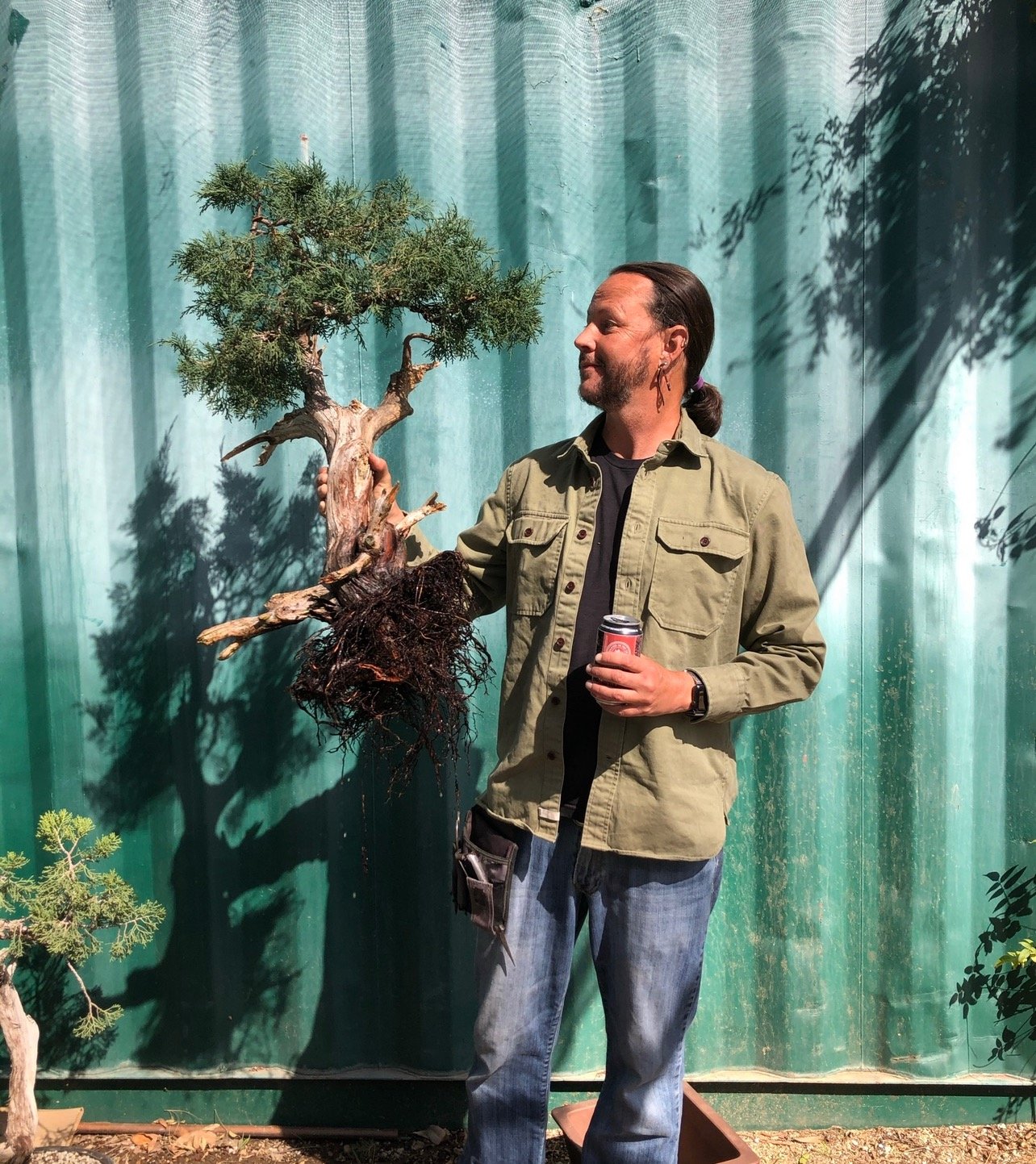
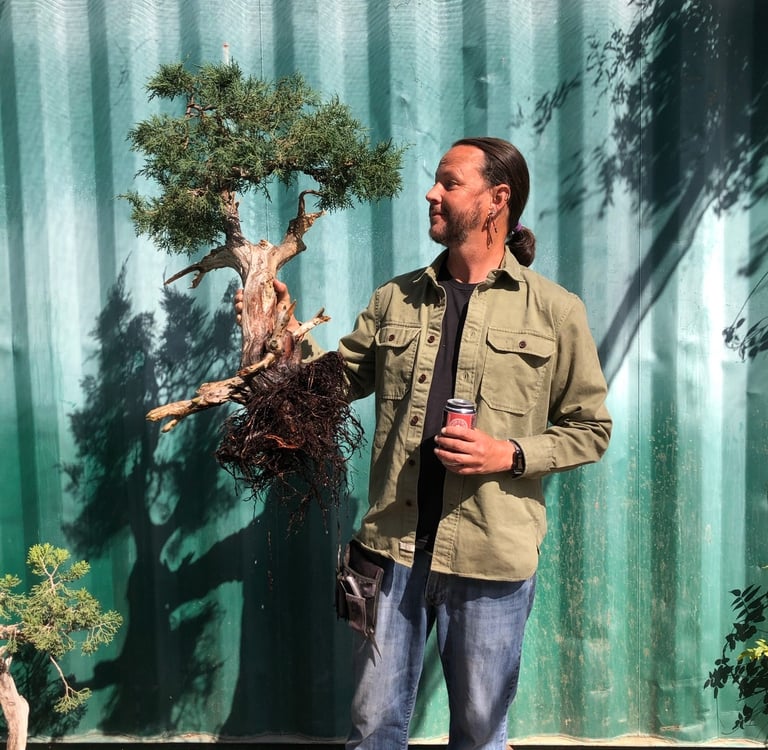
Branch Development is a medium growth rate stage — Key aspects include branch selection (including removing sacrificial branches from the previous stage), structural wiring, creating deadwood (where applicable), and healing smaller wounds.
The transition from Trunk Development to Branch Development often starts with an “initial styling.” This is what you’ll commonly see at bonsai “demos” where a demonstrator takes a piece of unruly raw material and wires it into submission. This is possible in a couple of hours because the work of the Trunk Development stage was done behind the scenes in the previous years. If there isn’t a good trunk to reveal and feature with a styling, then it isn’t time for styling yet!
The initial styling is just the beginning of Branch Development. Further work at this stage will include pruning for ramification, wiring secondary branches, and root-work to get the tree into a “training pot” (something smaller than its grow out pot, but not its final bonsai pot yet). Many pre-bonsai with great potential are hampered by being rushed into a small bonsai pot, where slow growth will stall the tree before the structure is fully developed. Patience is key.
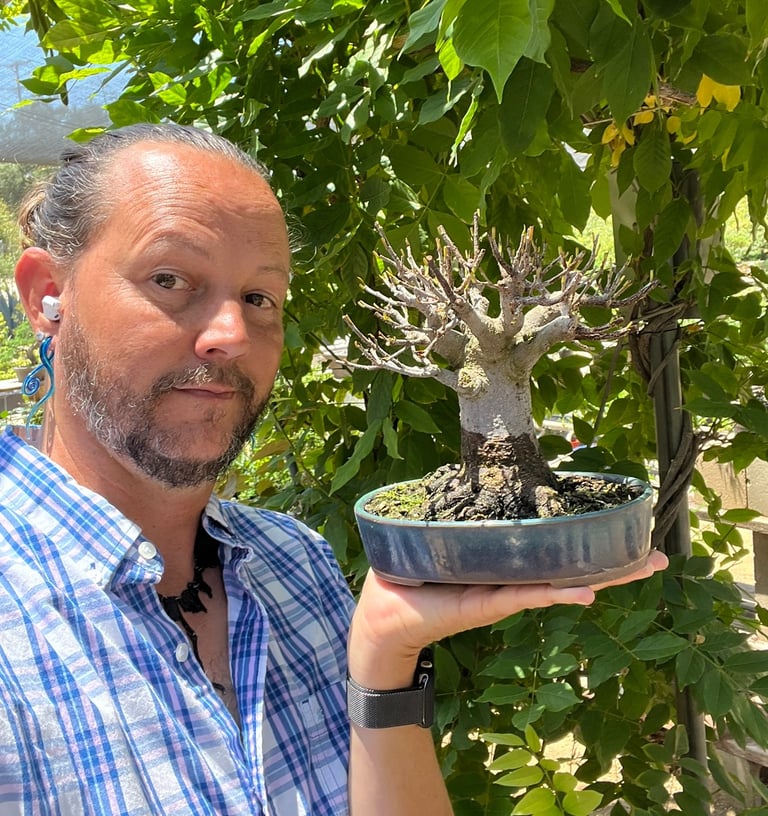
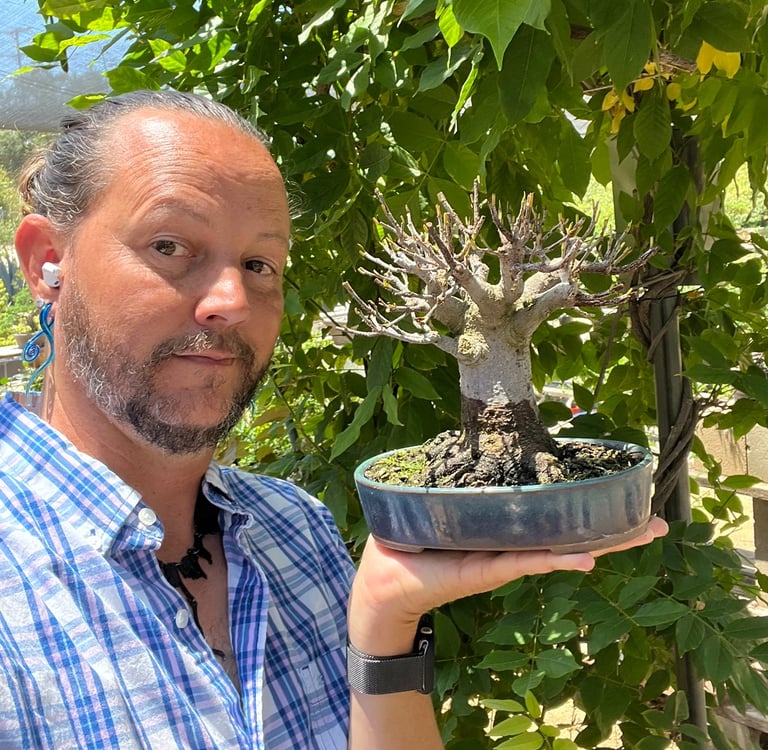
Refinement is a slow growth stage — Key aspects include increasing ramification (branching), reducing foliage size, and potting into a small bonsai container. I use inorganic soil and organic fertilizer at this point for more control over growth rate.
This is the stage where it really becomes a bonsai. Only now that we have a proportional trunk and branching do we need to be concerned about leaf reduction, super clean pads, and the perfect pot. I think of the small ceramic pot like the frame for a painting: it happens at the end of the process, not the beginning. You don’t frame a blank canvas and then start painting. Instead, you create a painting, and then choose a suitable frame for it; bonsai is the same.
Are We Done? The only truly finished bonsai is a dead bonsai, so refinement isn’t the end of the story. A tree must continue to grow to live. Despite our best efforts to manage that growth, all bonsai will eventually outgrow their design. At that point, a “finished” bonsai may need to loop back to the the Branch Development stage for a bit of re-styling. Similarly, a tree that has survived a major pest attack or other disaster may need to be left alone to grow and regain strength. Sometimes you just purchase a bonsai that someone else thought was perfect, but you have a different design in mind. In any case, it is normal to occasionally take a tree out of refinement. In fact, it is impossible to maintain a tree at peak refinement all the time — sometimes they just need to grow! I think of a refined tree like a bodybuilder: on stage they look ripped because their body fat is extremely low and they are dehydrated. They can’t maintain that forever, so they alternate between a “bulk phase” where they eat and live more normally, and a “cut phase” where they limit intake and slim down just before a show or competition. When you see photos of a “perfect” bonsai online, remember that they don’t look like that all the time.
So how can you apply these ideas to your collection? Take a good look at one of your trees. Are you still hoping to thicken the trunk? Then it is still in the Trunk Development stage and probably doesn’t belong in a small pot yet. Has your refined bonsai grown weaker over the past couple of years? Then it might be time to up-pot to let it grow and regain strength for a season or two. If you don’t have room for a farming operation, then consider purchasing trees that are already in the Branch Development or Refinement stage to save time and space.
Above all, be honest with yourself about your bonsai and your goals for them. If you’re applying refinement techniques to a trunk in development, then you’re working against yourself and slowing your tree’s progress. Evaluate the current stage of your bonsai, and make a plan for moving it to the next stage.
Happy growing, and I’ll see you next month!