
January 2026 Bonsai "Growing Tips" Column
Seasonal bonsai musings from Colin
Colin Fraser Purcell
1/10/20263 min read


Happy New Year!
December 21st was officially the first day of winter, and it made quite an entrance this year! Atmospheric rivers brought lots of rain, and I’m sure we haven’t seen the last storm of the season, but let’s look on the bright side. Cloudy, cool, and humid weather is great for repotting many temperate bonsai species, and the slightly acidic rainwater helps to flush our pots of built up hard water deposits and fertilizer residue.
Deciduous Species: Most deciduous trees are bare at this point. No leaves means little to no transpiration to pull water up out of the pot. As such, they will stay wet longer, and they don’t need to be watered nearly as often. Constant watering when the tree is dormant can lead to mold, algae, and rot. If the pot is still wet a week or more after a rain, then it still doesn’t need to be watered (but don’t let it get bone-dry). During this dormancy, deciduous bonsai are displaying their “winter silhouette,” showing off their branch structure. In fact, an entire Winter Silhouettes Bonsai Show is happening at the LA Arboretum on Saturday, January 17th. It is a great opportunity to study the structure of quality deciduous bonsai, and I highly recommend checking it out if you can!
Speaking of deciduous bonsai . . . what are your Chinese Elms doing? Some of mine are completely dormant, others are just now dropping leaves, and a couple are even pushing some buds. For landscape purposes they are often sold as “evergreen elms” because they can hold their leaves through our mild winters. The same bonsai elm may stay green one winter and drop its leaves the next, mostly dependent on how cold it gets. If you’d like to see the winter silhouette, it’s ok to defoliate them now to nudge them into winter. If an elm that still has leaves needs to be repotted (next month), I will usually defoliate the tree just before the repotting, avoiding any wilting and kick-starting spring buds.
Repotting Begins: January is when I start repotting Japanese Black Pine bonsai. I like an inorganic soil mix comprised of 1/3 Akadama and 2/3 volcanic rock (pumice, lava/scoria, or any combination of the two). If you haven’t already done your pine winter work, including any wiring, be sure to do that before repotting. Following a repot, I don’t want to jostle the bonsai as new roots are growing. By the end of the month I will have started in on repotting junipers, which will continue all through February. For deciduous bonsai, I like to wait until just as the buds are beginning to swell; this indicates that the tree has started to move stored sugars from the roots up into the canopy, and ensures it will start growing immediately following the root work. This will usually be sometime in February or March depending on the species and the weather. It is better to observe your trees closely, and make decisions based on their “behavior” rather than sticking to a rigid calendar.
Ongoing Maintenance: As usual, I’ll be keeping up with basic tasks like bottom-siding junipers, pulling weeds, and watching for pests. Cold winters kill off many pests, but his has been a very mild winter so far, and some infestations may survive — be vigilant!
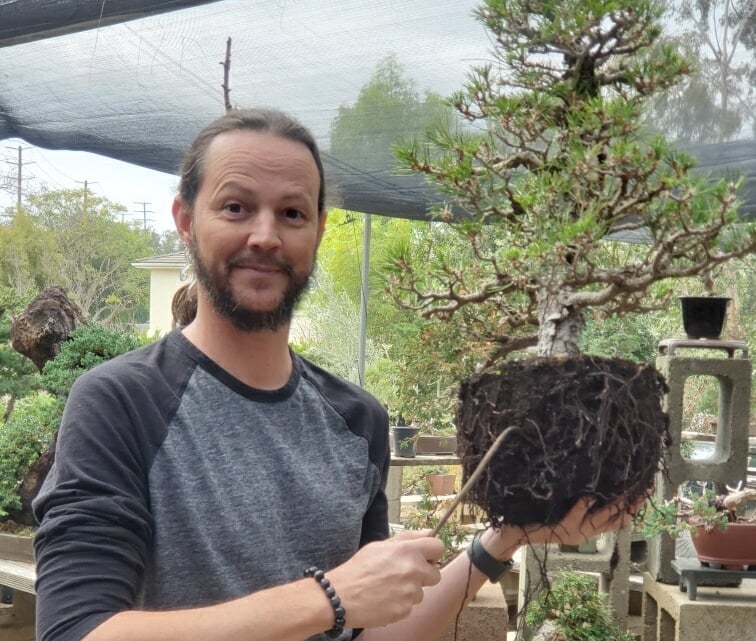
My plan is for next month’s “Growing Tips” Column to be mostly about repotting. Get your soil mixes ready, and your pots set up, and I will see y’all in February with soil under my nails and mud on my shoes. Until then, stay dry!