
February 2026 Bonsai "Growing Tips" Column
Seasonal bonsai musings from Colin
Colin Fraser Purcell
2/10/20263 min read
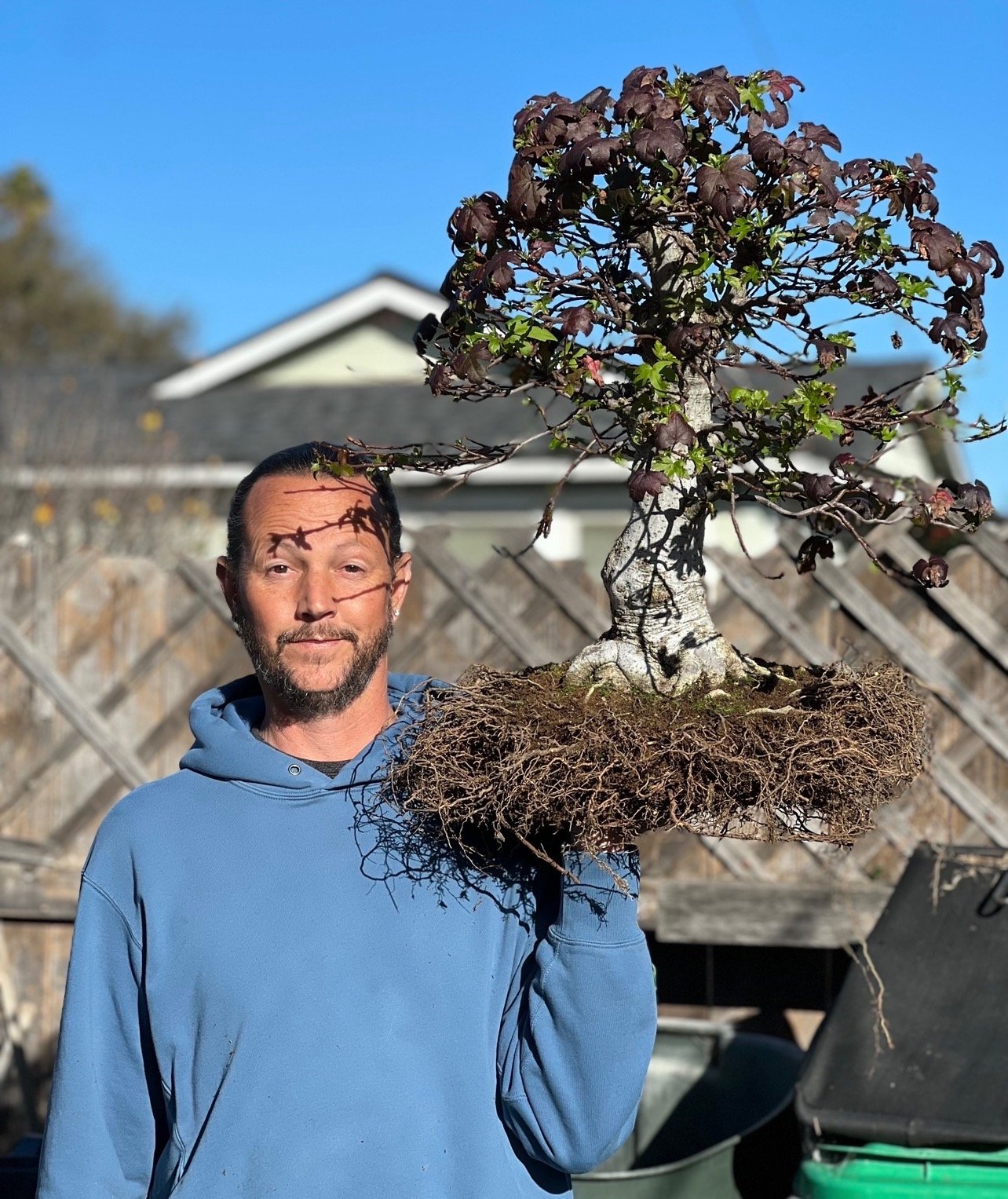
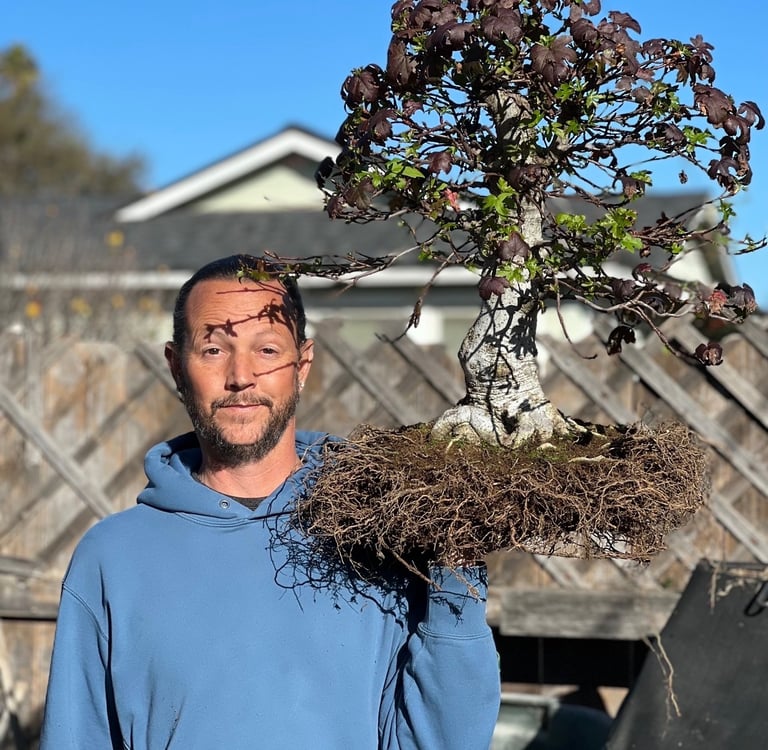
Repotting is in Full Swing!
In spite of the mini heatwave that just ended, it is in fact, still winter. February brings cooler weather, overcast skies, and higher humidity, which is ideal for repotting many bonsai species. Here are a few thoughts and tips that you may find useful this season . . .
Bonsai beginners often ask me if repotting will hurt a tree. On the contrary, repotting is an opportunity to improve both the health and aesthetic of a bonsai! There are a number of different reasons to dig in. The first is easy: as a tree fills its pot with roots, and soil begins to break down, growth may slow and water will have a harder time penetrating into the root mass. Repotting allows trimming of roots and refreshing of soil, giving the bonsai room to grow again. It’s also a great opportunity to improve the quality of the tree’s nebari, removing downward-growing and circling roots in favor of a nice radial spread. Remember, roots need management just like branches do. As a general rule, I repot most trees in bonsai pots every 3-5 years (depending on species, pot size, and soil mix).
When to repot: Timing is crucial when repotting bonsai. For temperate species (like junipers, pines, elms, maples, etc.) I like to repot near the end of their winter dormancy, just before they wake up for spring. In our area, that’s usually now. When possible, I like to catch deciduous trees just as the buds begin to swell, but before they open fully and begin extending. Hold off on tropical bonsai like ficus and bougainvillea, which I prefer to repot during the warm growing season.
Because our So-Cal climate is so mild, we have some leeway on timing, but ideally I like a week or two of cool weather following repotting of temperate trees, so keep an eye on the forecast. I also keep freshly repotted bonsai in a shady/humid spot for up to two weeks while they recover.
Soil Mixes: For most “finished” trees in ceramic bonsai pots, I like an inorganic mix of Akadama and volcanic rock. A ratio of about 1/3 Akadama is popular and that’s my go-to. Lava and/or pumice make up the other 2/3. This soil mix is free-draining and provides the roots plenty of oxygen. The trade-off is that it dries quickly, so I need to water daily in hot weather. Be sure to adjust watering to your soil mix; if you use a more water-retaining soil, you will need to water less frequently to avoid soggy roots.
Common Issues: Try to avoid what I call “the mound of shame.” A slight mounding of soil and a nebari that sits just above the rim of the pot can be nice, but there shouldn’t be inches of soil piled up in the middle of the pot. Even worse, I often see a cake of roots clearly conforming to the shape of the previous pot, sticking up like an island in the middle of the new container. “Wallking roots” are another concern. Generally a bonsai should look ancient and grounded and permanent, not like it’s about to scurry away on root legs. Air gaps under roots make a tree look unstable (with a few exceptions). If you find that you’re having any of these issues, consider planting your tree lower in a deeper pot. Your bonsai may not be ready for its final shallow pot, so don’t rush it.
Tie your trees down! The root hairs that take up water at the growing root tips are a single cell thick. Every time a tree wiggles in its pot, those delicate structures can be damaged or sheared off. A pair of wires running up through the drainage holes and over the roots should be enough to hold it secure, but be sure to twist them over roots that won’t show; you don’t want wire scars on your nebari.
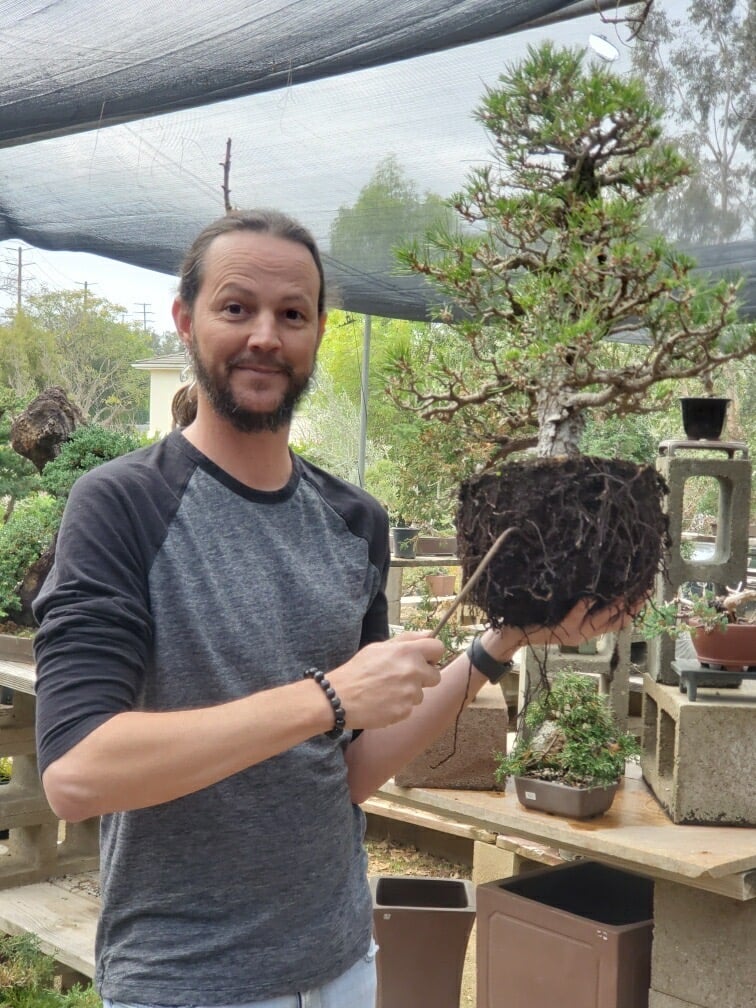
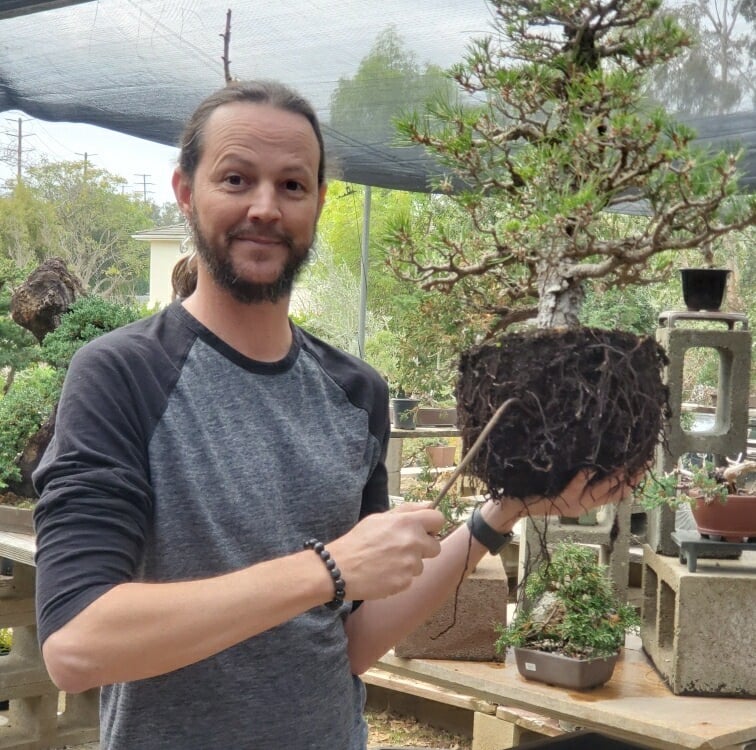
Repotting is a necessary part of caring for bonsai. If pruning is like a haircut, root work is a little more like surgery. That may sound daunting, but just like a necessary surgery, you probably shouldn’t put it off for too long. Happy repotting, and I’ll see you again next month!