
April 2026 Bonsai "Growing Tips" Column
Seasonal bonsai musings from Colin
Colin Fraser Purcell
4/9/20263 min read
Finding Balance
It looks like we may finally get some actual spring weather — fingers crossed! The current 30-day forecast is predicting daytime high temps between the mid-60s and low 70s and maybe even a little more precipitation (so I can take a day off from watering now and then). There’s lots of bonsai activity this time of year, so read on to see some of what I’m up to . . .
Balancing Black Pines: My Japanese Black Pine Bonsai have really taken off lately. Candles are extending and pollen cones abound. It’s too early to start removing candles entirely, but there is some balancing to be done if they are growing unevenly. If all of your new candles are roughly the same length, congratulations, your tree is fairly balanced. Candle length is a pretty good indicator of strength, so if some candles are much longer than others, then I want to remove strength from those areas and redirect it to weaker areas. Breaking or cutting the tallest candles in half (being sure to keep at least some emerging new needles) is one way to accomplish this. Don’t worry too much about the exact length of the broken candles; they will still be fully removed along with all the others during the summer de-candling.
Juniper Runners: I sound like a broken record, but it’s a good time to trim junipers. Vigorous new spring growth often leads to “runners.” These are elongating pointy shoots that you can clearly see sticking out of the silhouette of a bonsai. As with the long pine candles above, these are a signal of high energy in an area. Removing the strongest runners will send more energy to the weaker areas of the tree, improving balance.
Hardwood Bonsai Wiring: Many “hardwood” deciduous bonsai like Maples, Crape Myrtles, and Elms have branches that can become stiff (as the name implies) when they mature. They are much easier to wire when the new shoots are young and still flexible. If you try this, be gentle, use light wire, and remove it quickly — new branches thicken and lignify quickly in the spring, and wire scars are extremely long-lived on smooth barked deciduous trees. A couple of weeks can be too long this time of year. Remember that new shoots don’t yet have a woody connection to the branch, so they can pop off easily if you’re not careful. I like to wire the long shoots and then prune them back to the silhouette after positioning.
Ginkgo Bonsai: My Ginkgos emerged from dormancy earlier this year than I can ever recall! The heat wave seems to have given them a strong signal to grow. I’ve already done at least one round of cut-backs on extending spring shoots. Ginkgo buds tend to grow in two distinct ways; one is fairly typical elongating shoots, and these can be cut back to two leaves like most broadleaf trees. The other is compact whorls of leaves on what’s called a “spur shoot.” There isn’t much to be done with these — they just poof out a bunch of leaves and that’s about it for the year (making ramification a frustrating project with Ginkgos).
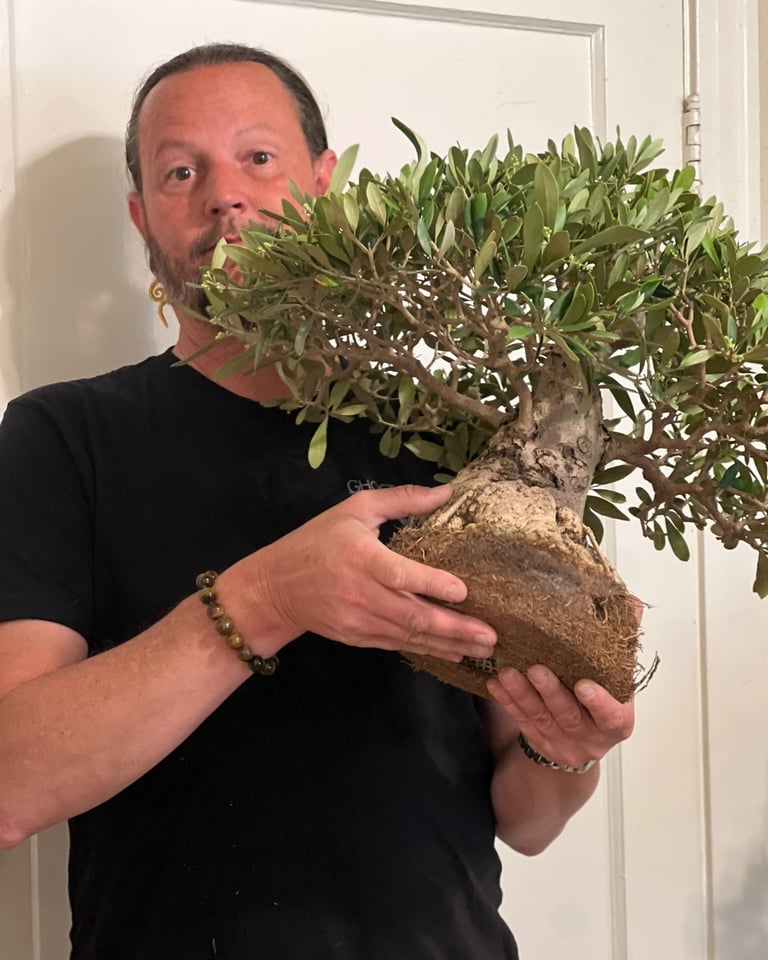
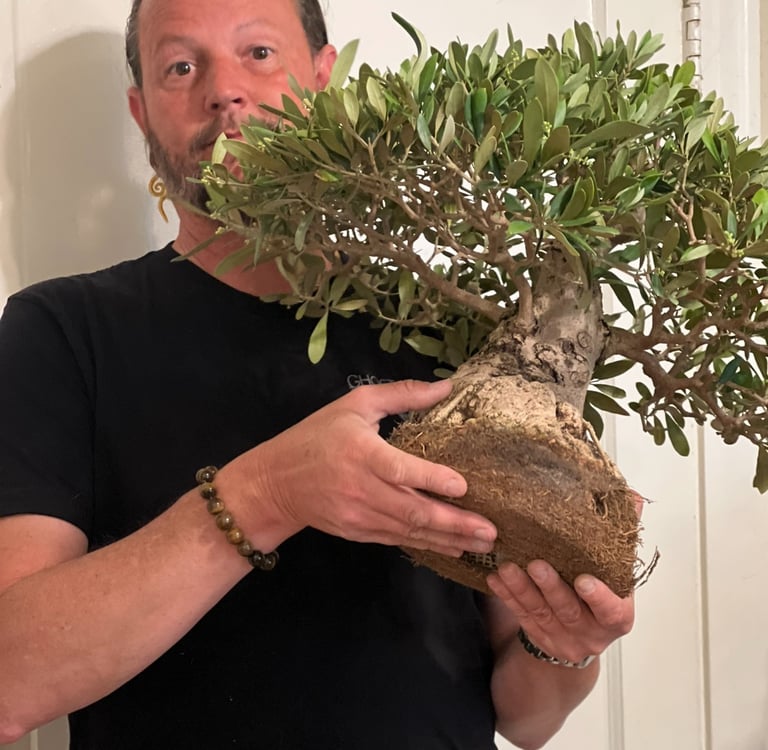
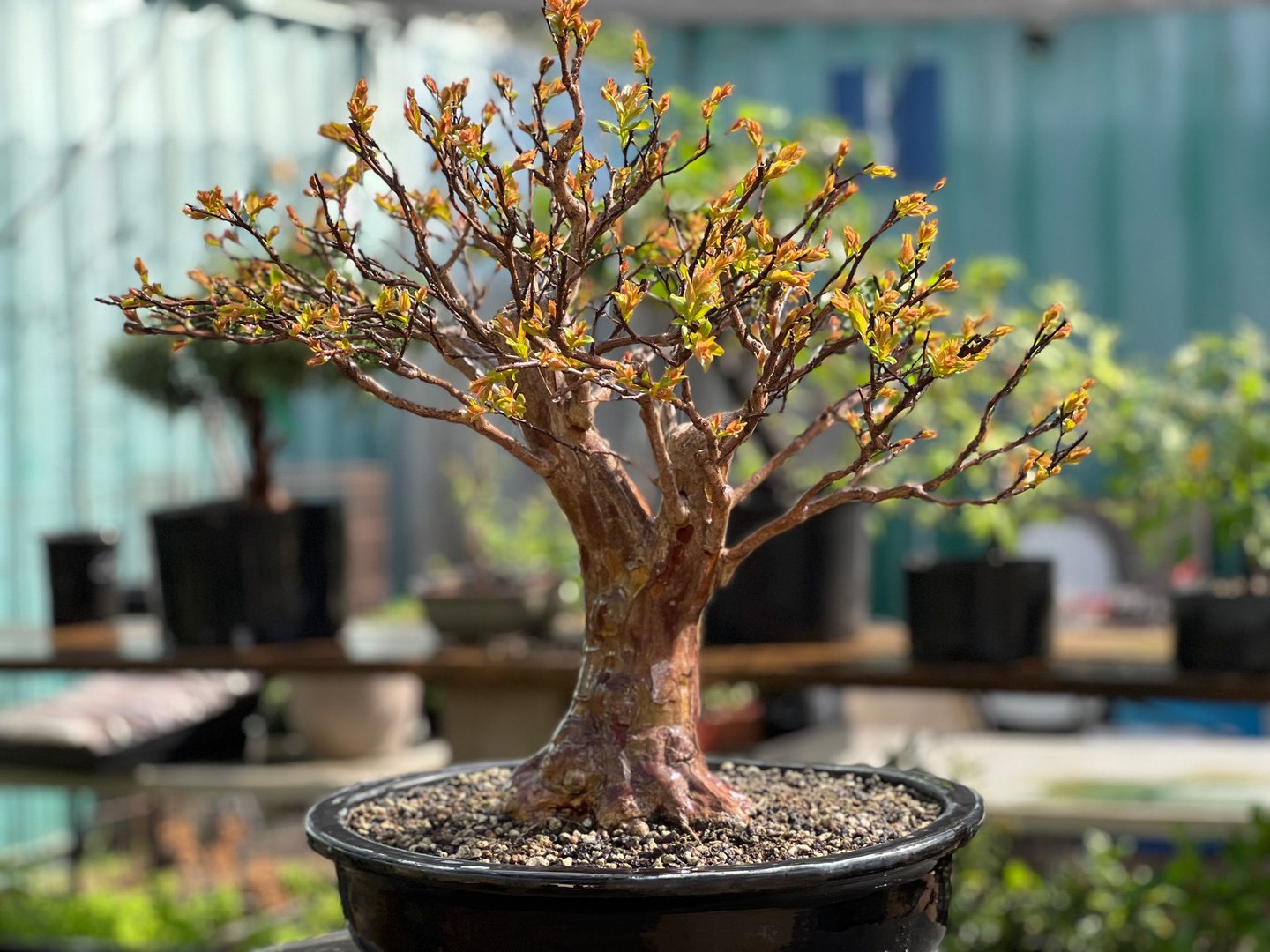
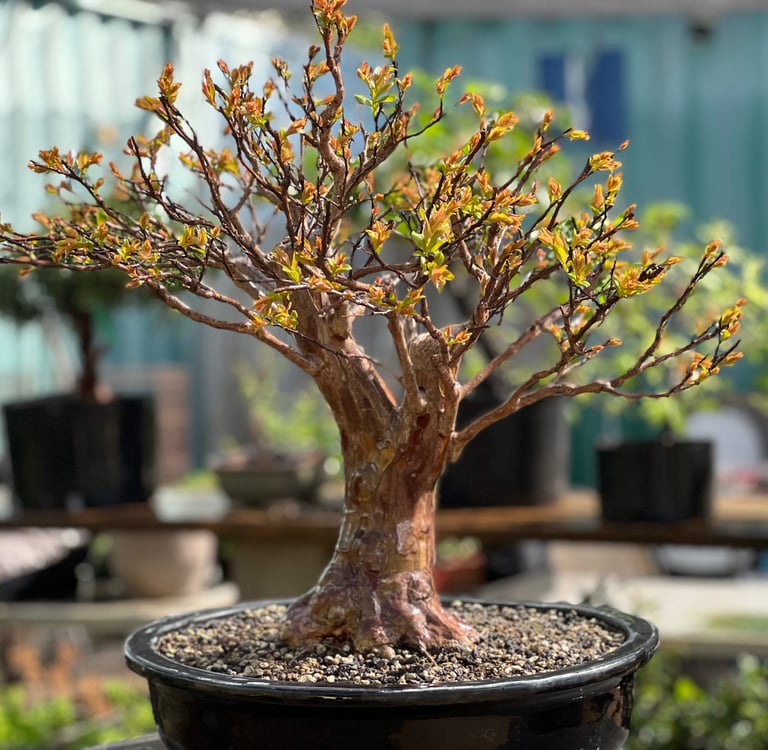
Repotting Mediterranean and Subtropical Bonsai: This year, April is shaping up to be a good time to repot Olives, Pomegranates, Cape Honeysuckle and other bonsai species from mediterranean climates. It isn’t cold enough at night to damage tender new shoots, and mild overcast days help prevent drying out after root-work. Many of these trees have already been growing new shoots for a month or more, so I like to cut them back hard right before repotting. As usual, I’ll keep freshly repotted trees in a shady location for a couple of weeks.
I hope the mild spring weather gives you a chance to just sit in your garden and enjoy your bonsai collection. I find that in bringing balance to my trees, they in turn bring balance to me.